Understand kWh, manufacturer range conditions and charging intervals. Compare Sur-Ron, 79Bike and Y-VOLT batteries before choosing.

Start with energy, not voltage alone
Nominal battery energy is approximately volts × amp-hours ÷ 1,000. A 72 V 35 Ah pack therefore stores 2.52 kWh nominally. Usable energy and electricity drawn from the outlet are different quantities. Voltage alone does not tell you how far the bike will travel.
| Model | Battery | Nominal energy |
|---|---|---|
| Hyper Bee 2026 | 58 V · 22 Ah | 1.276 kWh |
| Light Bee X 2026 | 72 V · 35 Ah | 2.52 kWh |
| Light Bee 2 2026 | 78.54 V · 45 Ah | 3.53 kWh |
| 79Bike Falcon Pro | 72 V · 35 Ah | 2.52 kWh |
| Ultra Bee 2026 — 21 kW | 74 V · 60 Ah | 4.44 kWh |
Sur-Ron Ultra Bee 21 kW battery: 74 V, 60 Ah and 4.44 kWh
The Ultra Bee 2026 offered by NYVOLT lists a 74 V 60 Ah battery, equivalent to 4.44 kWh nominally. Its stated charging time of approximately 2.5 hours refers to 20–80%, not a full 0–100% charge. The stated 115 km range is associated with 50 km/h; it is not a guaranteed enduro riding distance.
Compared with the Light Bee 2's stated 3.53 kWh, the Ultra Bee has 0.91 kWh more nominal energy. This does not establish an equivalent range gain: weight, speed and terrain also matter. The Light Bee 2 vs Ultra Bee 21 kW comparison puts battery capacity in the context of rider fit.
Follow the instructions for the exact bike and supplied charger. Do not substitute specifications from a 24.5 kW Ultra Bee for this 21 kW configuration. These figures come from NYVOLT's model listing, not from a charging test carried out by our team.
Lynx, Falcon GT and Y-VOLT batteries
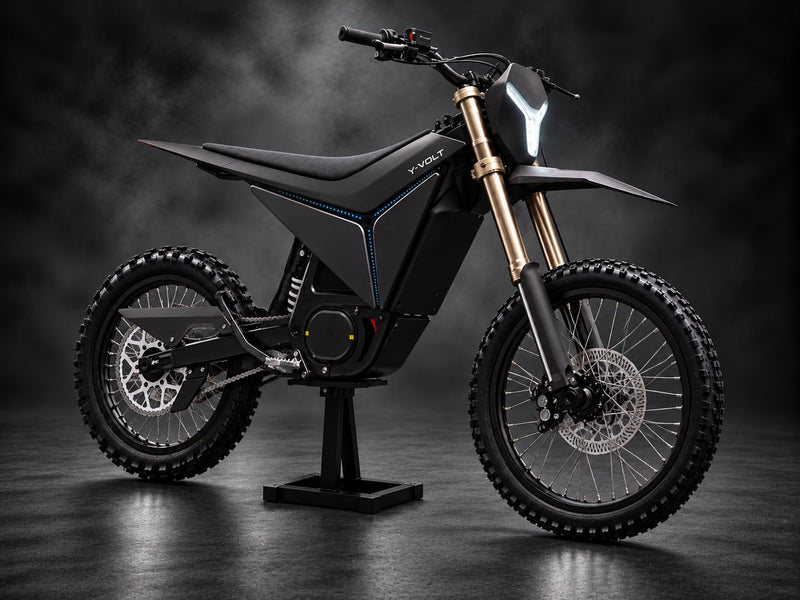
The Lynx and Falcon GT list 72 V 40 Ah batteries, equivalent to 2.88 kWh nominally. The Y-VOLT Surge V is described by its manufacturer as approximately 4.3 kWh. Capacity alone does not guarantee a riding distance. Use electricity measured at the outlet and your contract rate to calculate charging cost.
Keep the test conditions attached to every range figure
The Light Bee X states 75 km at 40 km/h; the Light Bee 2 states 108 km at 40 km/h or 160 km at 25 km/h; the Hyper Bee states 56 km at 40 km/h. The Falcon Pro’s advertised 75 miles has no equivalent test protocol specified here. These claims are not a side-by-side riding test.
20–80% does not mean a full charge
Always record the starting and ending charge levels. The Light Bee 2 lists about two hours from 20–80%, versus about four hours from 0–100%. Charging time also depends on the specified charger and operating conditions. Follow the manufacturer’s charging and storage instructions rather than using an improvised charger or an assumed temperature limit.
Estimate cost from the electricity actually used
For a measured charging session, multiply the kWh recorded at the outlet by your electricity rate. Nominal pack capacity alone does not include charging losses or show how empty the battery was. For route planning, leave a margin and adjust it using your own recorded consumption on the intended terrain.
How much does it cost to charge a Sur-Ron or 79Bike?
Session cost = electricity measured at the outlet in kWh × your electricity price per kWh. A session using 2.80 kWh at €0.25/kWh costs €0.70 in electricity, excluding standing charges. The €0.25 rate is an example, not a current supplier offer.
For planning before you have measurements, consider a nominal 72 V × 35 Ah = 2.52 kWh battery, as specified for the Light Bee X 2026 and Falcon Pro. With an assumed overall charging efficiency of 90%, a theoretical full-charge equivalent uses 2.52 ÷ 0.90 = 2.80 kWh at the outlet. NYVOLT has not measured this efficiency, and nominal energy may differ from usable energy.
| Illustrative price per kWh | One session | 10 identical sessions |
|---|---|---|
| €0.20 | €0.56 | €5.60 |
| €0.25 | €0.70 | €7.00 |
| €0.30 | €0.84 | €8.40 |
A partial charge uses a different amount of electricity. Starting level, charging losses and the final charging stage all matter. This is a budgeting example, not advice to fully discharge the battery.
How do you find your actual charging cost?
- Check the electricity rate, including applicable taxes, for the session.
- Use an energy measurement method suitable for the installation and charger power; record consumed kWh and starting/ending battery levels.
- Multiply kWh by the rate. If charging crosses tariff periods, calculate each period separately.
Electricity is only one ownership cost. Maintenance, equipment and battery wear are separate. See our purchase prices and budgeting guide.
Calculation added September 29, 2026. The 72 V 35 Ah specifications were checked against Sur-Ron UK Light Bee X MY26 and 79Bike Falcon Pro. This is not a NYVOLT charging test.
Buying guides for this model
- How to choose an electric dirt bike
- 2026 Sur-Ron Light Bee X vs Light Bee 2
- Sur-Ron Light Bee X vs 79Bike Falcon Pro
Sources and method
Document-based comparison of the configurations shown, updated September 22, 2026. Performance figures are manufacturer claims, not results of a NYVOLT riding test.
Plan your purchase
Explore electric dirt bikes · Ask NYVOLT for advice
For delivery outside France, contact NYVOLT before ordering: the destination, shipping arrangements, total price and lead time require written confirmation.